Too close to a black hole: visual review
Original 42-second Three.js space-disaster pilot. The complete video was rendered on the paired OnePlus CPH2767, whose WebGL renderer reports Adreno 829, then uploaded to Linux for soundtrack muxing and verification.
Breakup and disk formation in motion
This 18-second excerpt comes from seconds 14–32 of the finished phone-generated MP4. The scene is continuous; the star's material releases without position jumps. Gas paths and disk growth are illustrative.
What was checked
- 1080 × 1920, H.264, 30 fps, 1,260 frames, 42 seconds; complete decode.
- All AAC soundtrack packets retained unchanged and in order: original narration plus music.
- 6,400 seeded material particles checked at release; positions are continuous. Star deformation preserves the authored pre-breakup volume.
- 15 forward/reverse frame samples reproduce exactly. Eight native preview frames use at most 7 draw calls, 32,576 triangles and 8,300 points.
- Local visual revisions corrected an overexposed star, hard corona outlines and overly regular disk bands. The final phone frames below were inspected separately.
Sizes, time, gas fractions, colors, trajectories and the light ring are schematic. This is a stylized explainer, not a numerical relativity/hydrodynamic simulation or a claim of matching another channel's visual quality. Local software rendering produced ReadPixels performance warnings; the delivered encode used the phone GPU.
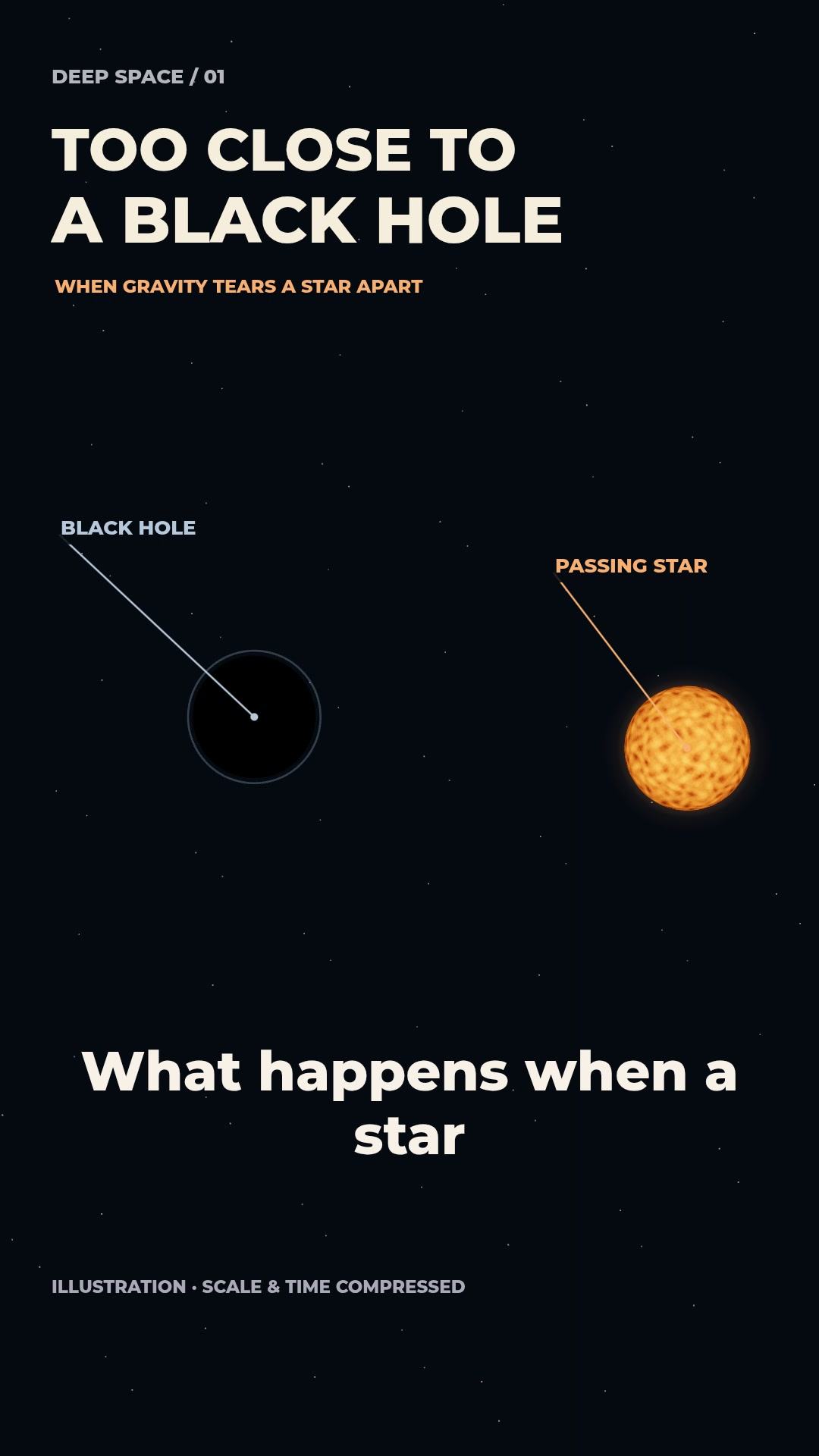
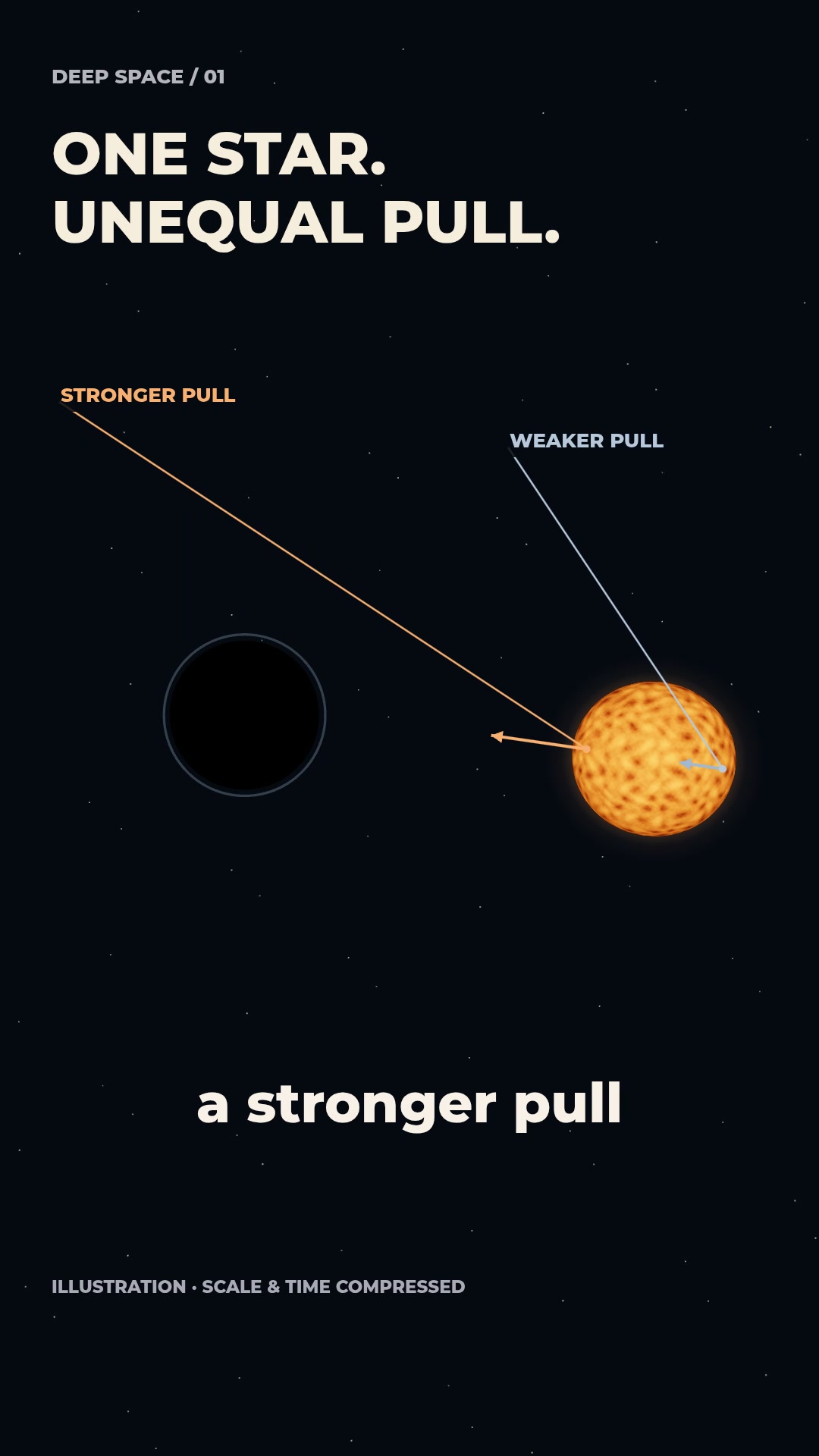
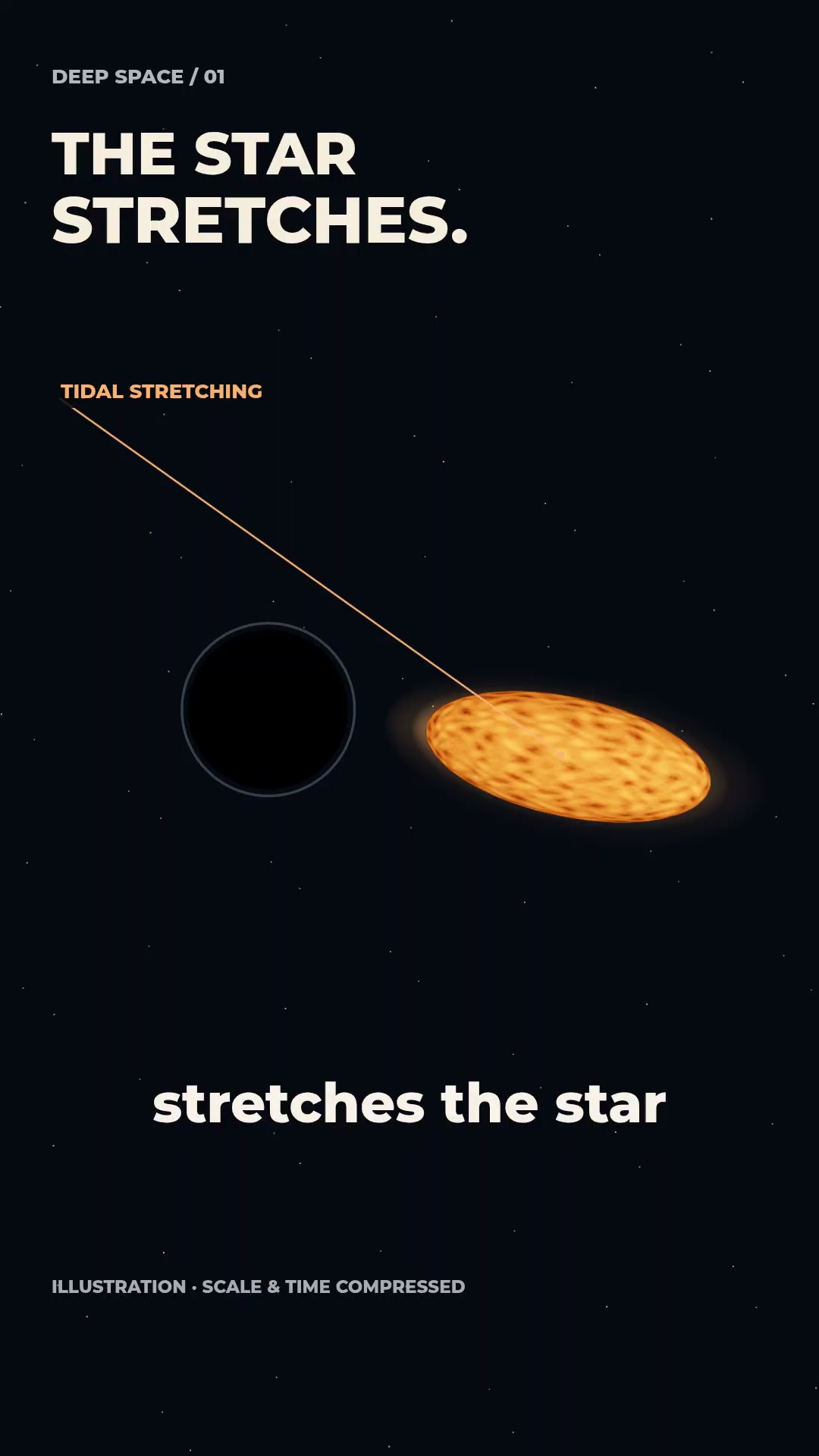
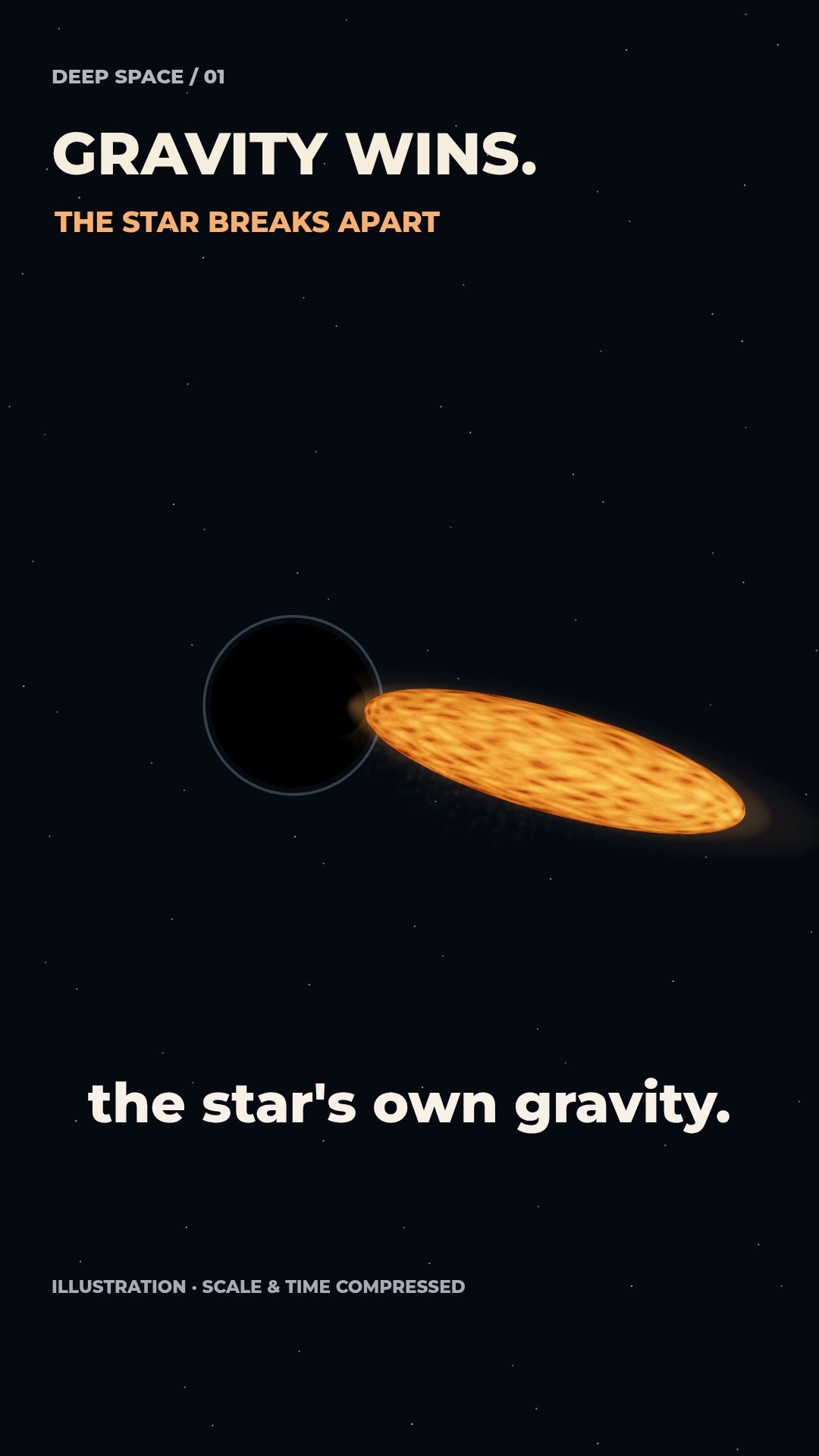
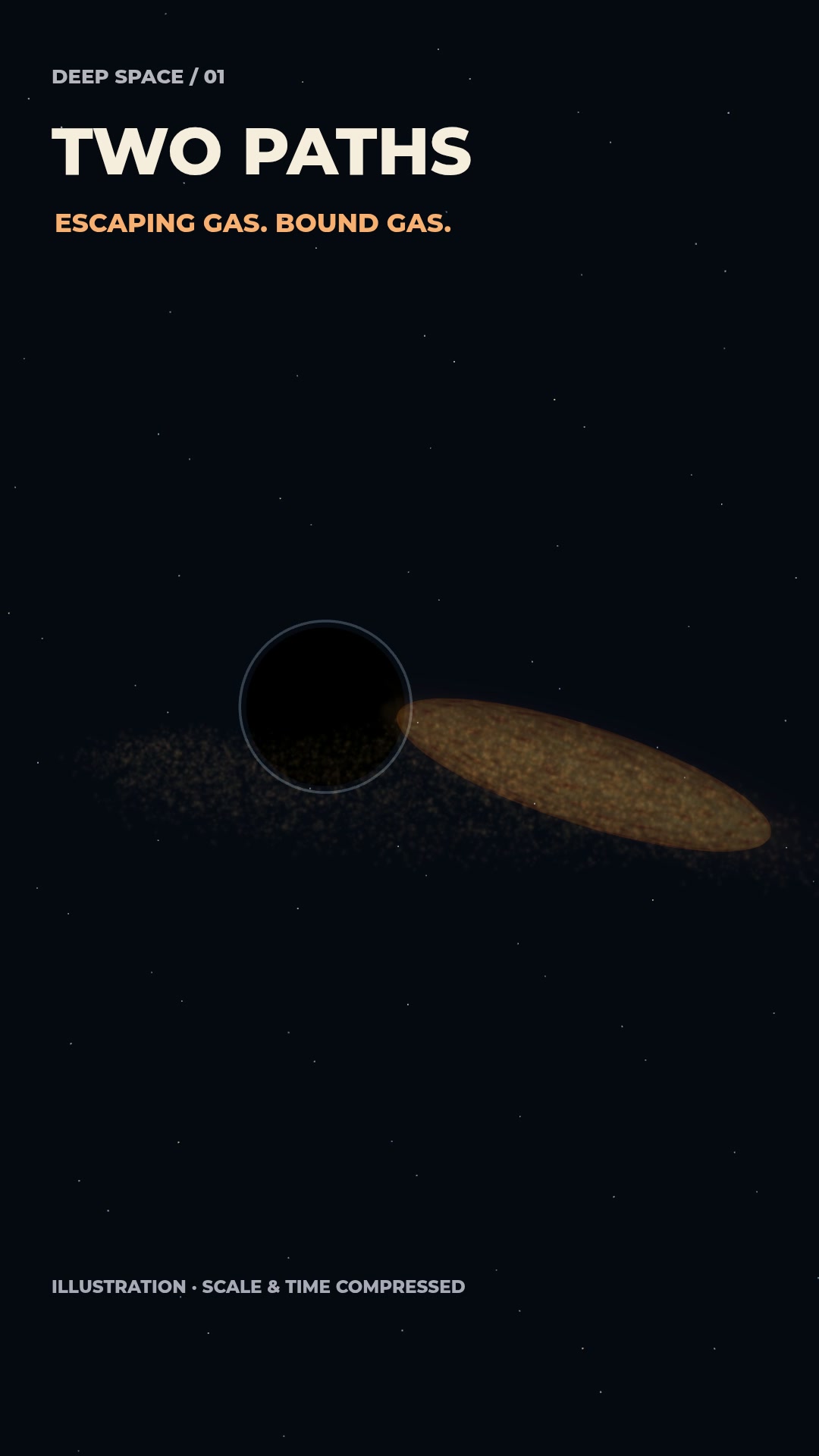
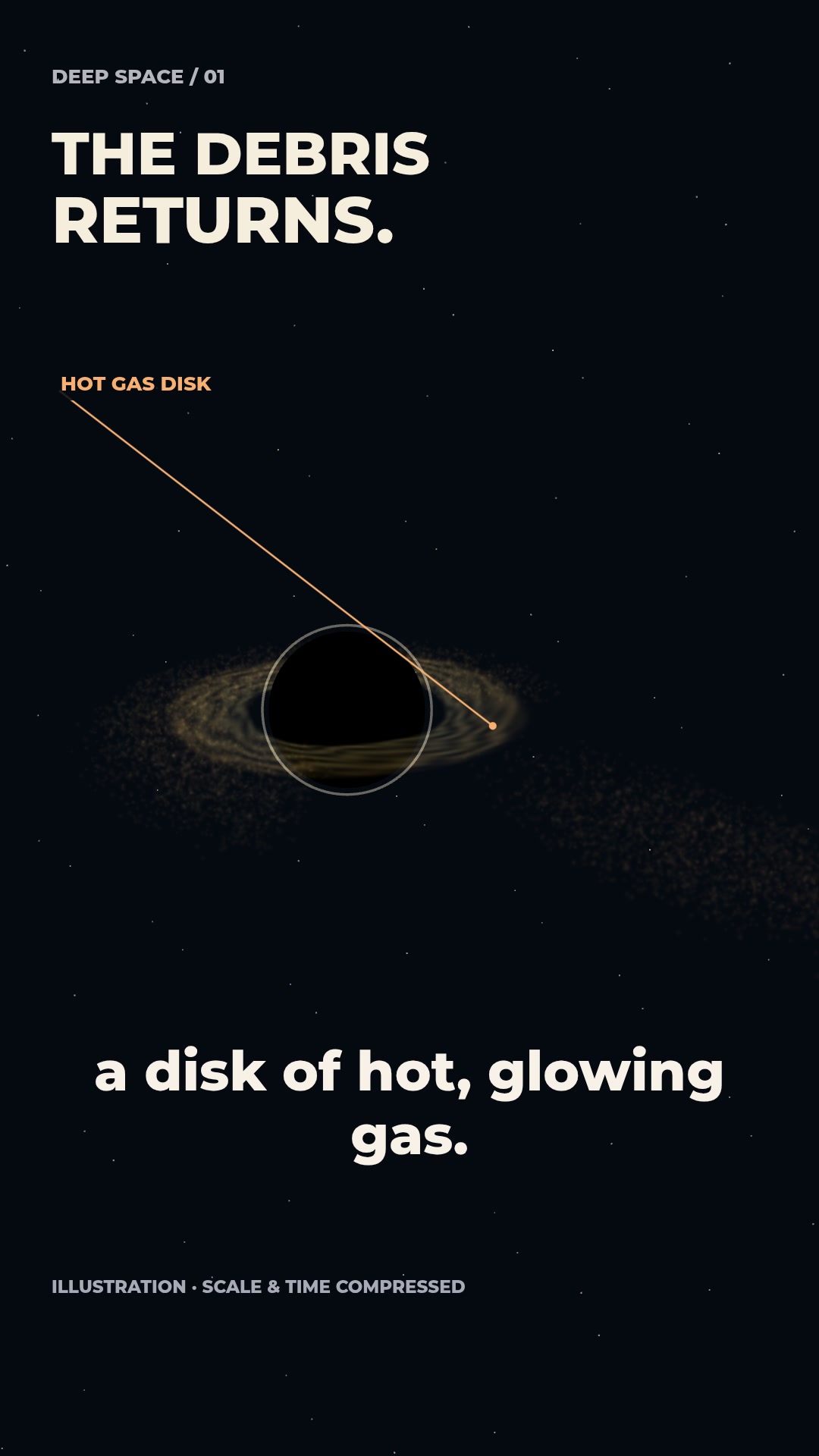
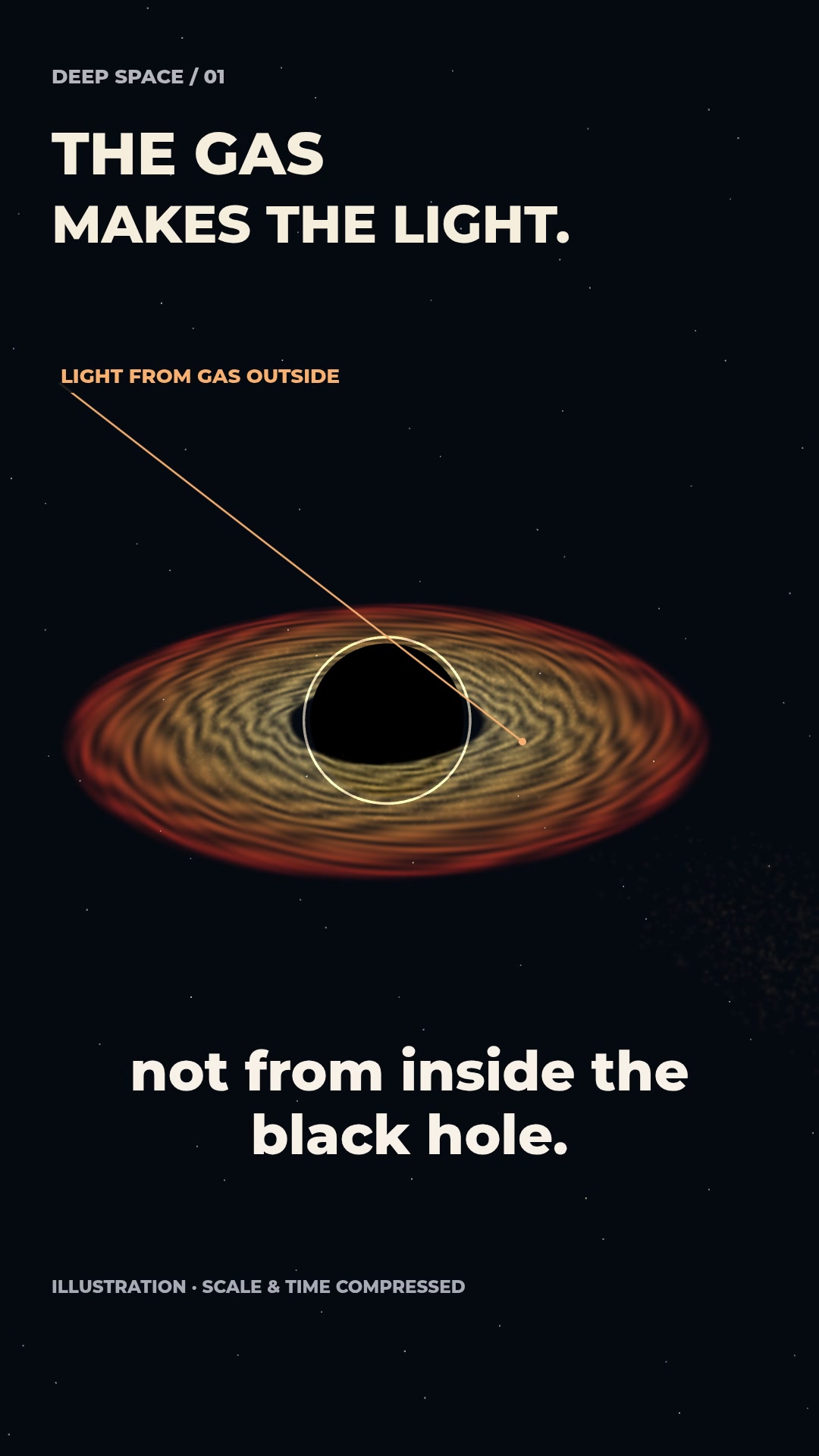
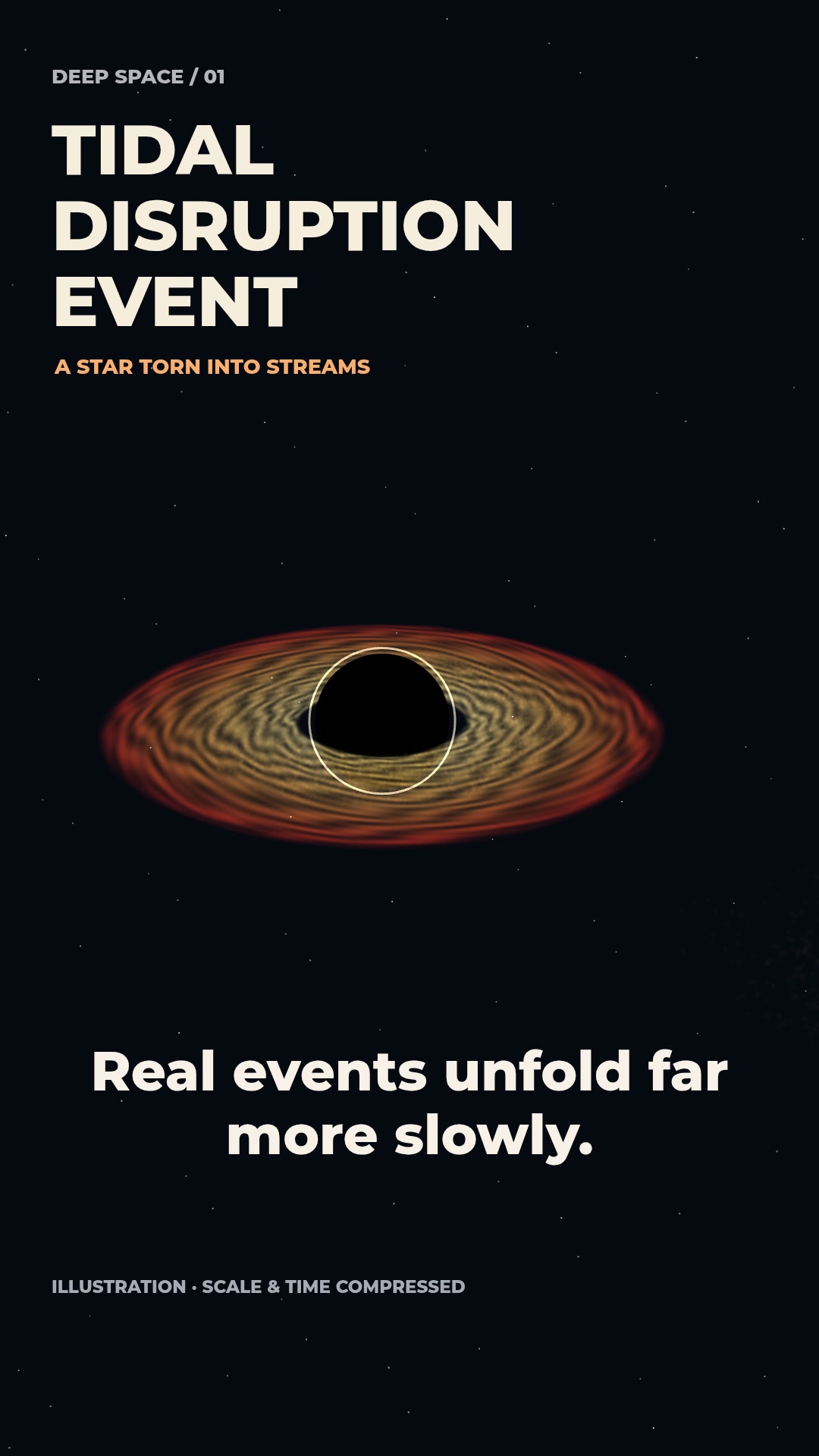
Frames from the finished phone video
These eight images were extracted from the verified MP4 at its native resolution. Click a frame to inspect it.
Source and frame hashes · Media verification · Scene checks · Published playback check · Transcript